Academician Colloquium: Free Electron Laser Technology and its Applications in Science
Digital Interactive Lab (DIL), 2/F, Main Library, HKU
November 13, 2025 (Friday) 4:00 pm – 5:00 pm
Speaker
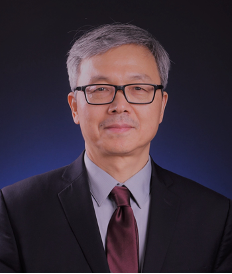
Professor Xueming YANG
Member of the Chinese Academy of Sciences
Chair Professor, Southern University of Science and Technology
Distinguished Fellow, Dalian Institute of Chemical Physics, CAS
Abstract
Since the advent of the first laser in the 1960s, we have witnessed a magnificent growth of laser technologies, which had revolutionary impacts on modern science and industrial technology. It is extremely difficult to generate VUV to X-ray lasers using regular laser media. In the last two decades or so, free electron laser based on modern accelerator science has become a new frontier in this area, expanding laser science and technology into the VUV and X-ray region. Here, I will briefly introduce the history of free-electron laser technology and its applications in physics, chemistry, and biology etc. The talk will also review the progress made in the free electron laser development in China in the last few decades and its future potential application as a tool in scientific research and frontier technology development.
About the speaker
Xueming Yang obtained his Ph.D. in chemistry at the University of California, Santa Barbara in 1991. He did postdocs at Princeton from 1991 to 1993 and at UC Berkeley from 1993 to 1995, and then became an associate research fellow at the Institute of Atomic and Molecular Sciences in Taipei and was promoted to a tenured full research fellow in 2000. He moved full-time to the Dalian Institute of Chemical Physics, Chinese Academy of Sciences, in 2003. He has been a Chair Professor at SUSTech since 2017. His main research focus is in the area ofphysical chemistry and chemical physics, especially chemical dynamics in the gas phase and at interfaces. He has developed a new generation of molecular beam instruments for quantum reaction dynamics studies, especially on quantum reaction resonances and geometric phase effects in chemical reactions. Over the last three decades, he has developed new experimental tools to investigate surface photocatalysis that allow us to understand photocatalytic elementary reactions at the single-molecule level. In recent years, he has also led a successful effort to build a new VUV free electron laser at Dalian for molecular and chemical science research. He has published more than 570 research articles, including 18 papers in Science and Nature. Prof. Yang has received numerous research awards, including the Humboldt Research Award, Broida Prize, Tan Kah Kee Science Award, National Natural Science Award, and Future Science Prize. He is a member of the Chinese Academy of Sciences and a foreign member of the Royal Society, and a fellow of the American Physical Society and the Royal Society of Chemistry.