Stellar evolution, mergers of stellar-mass black holes, and the growth of supermassive black holes in active galactic nuclei
Room 522, 5/F, Chong Yuet Ming Physics Building, The University of Hong Kong
November 11, 2026 (Wednesday) 4:00 pm – 5:00 pm
Speaker
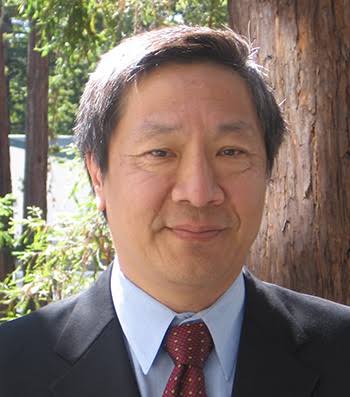
Professor Douglas N. C. LIN
Emeritus Distinguished Professor of Astronomy and Astrophysics, University of California, Santa Cruz
Recipient, Catherine Wolfe Bruce Gold Medal of the Astronomical Society of the Pacific
Member of the U.S. National Academy of Sciences; Fellow of the Royal Society
Abstract
Active galactic nuclei are mostly powered by inflow through accretion disks onto central supermassive black holes. Beyond a few hundred times their Schwarzschild radius, gravitational instability in these disks leads to self-regulated formation and evolution of massive stars which chemically enrich their neighborhood along with stellar-mass black holes. These compact remnants are captured by coexisting massive main sequence stars, form close binaries, readily merge, and excite intense gravitational waves with potentially observable electromagnetic signatures. These processes account for the persistent super-solar metallicity, especially in nitrogen and iron, inferred from broad emission lines of high and low redshift AGNs.
About the speaker
Douglas N. C. Lin is Emeritus Distinguished Professor of Astronomy and Astrophysics at the University of California, Santa Cruz. He was the founding director of the Kavli Institute for Astronomy and Astrophysics at Peking University (2007–2011), and he has also chaired UCSC’s astronomy department and served as associate director of the California Space Institute. Prof. Lin’s principal research interests are in the origin of the Solar System, star formation, astrophysical fluid dynamics, dynamics of stellar clusters, structure of galaxies, active galactic nuclei, and galaxy formation. He was elected to the American Academy of Arts and Sciences in 2002 and named an Honorary Fellow of the Royal Astronomical Society in 2010. He received the American Astronomical Society’s Brouwer Award in 2014 and the Catherine Wolfe Bruce Gold Medal of the Astronomical Society of the Pacific in 2015, the same year asteroid 25133 Douglin was named in his honor. He was named an AAS Legacy Fellow in 2020 and chaired the Science Committee of the Future Science Prize in 2022. In 2026, he was elected a member of the U.S. National Academy of Sciences and a Fellow of the Royal Society.
Anyone interested is welcome to attend in person or via Zoom: