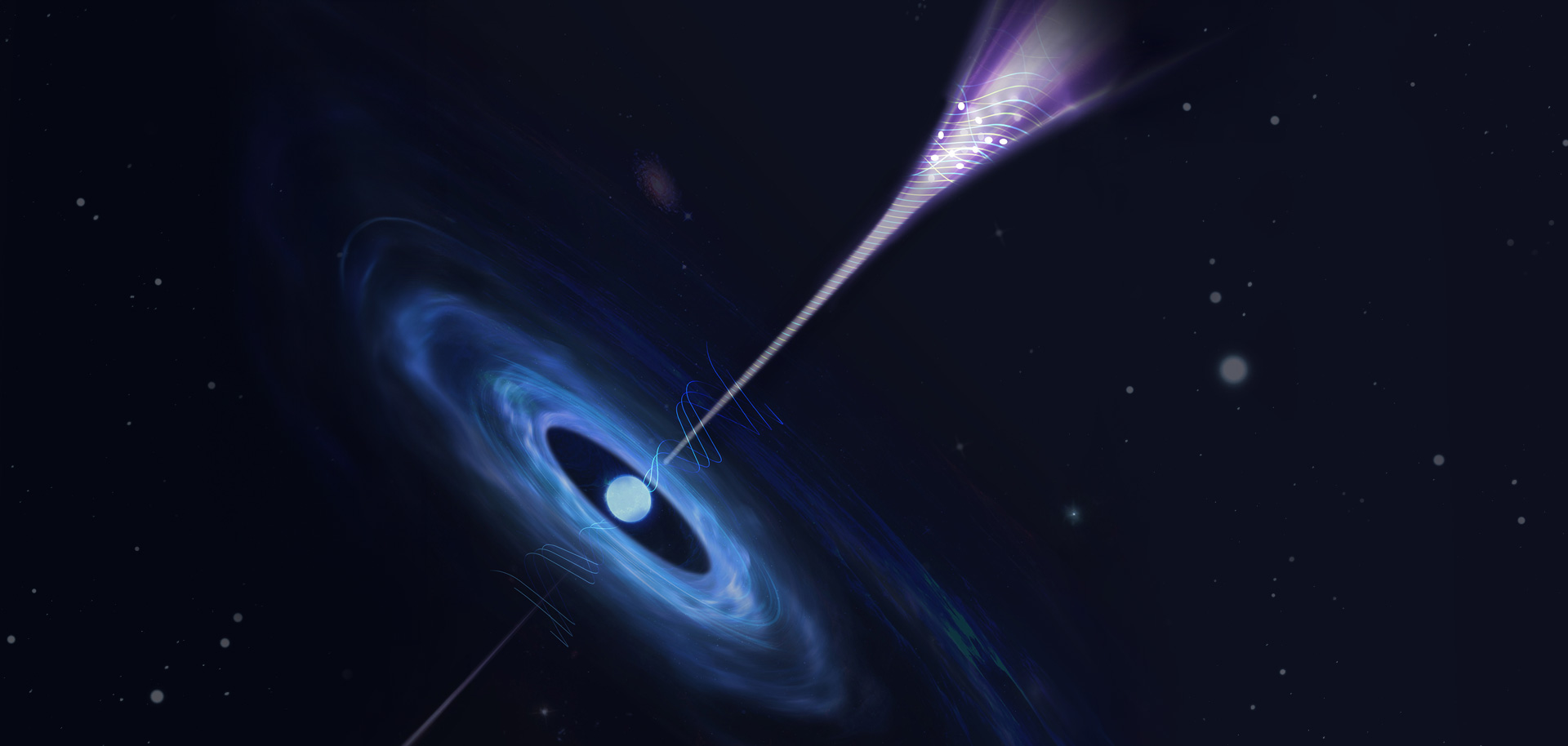
Research in high-energy astrophysics concentrates on the extreme physical processes driven by compact objects, particularly black holes and neutron stars, by observing and modeling violent phenomena such as X-ray binaries, pulsars, pulsar wind nebulae, and magnetars inside the Milky Way Galaxy, as well as gamma-ray bursts, supernovae, fast radio bursts, tidal disruption events, and active galactic nuclei at cosmological distances. The study in this field usually makes use of observational data from gamma-ray, X-ray telescopes in space and optical, and radio telescopes on the ground. Another methodological focus is the development and application of advanced computational simulations to model the behavior of accretion disks, outflows, and emission produced in these environments under extreme gravity, magnetic fields, and temperatures. The aim is to address foundational questions such as stellar evolution, compact object formation and evolution, neutron star equation of state, mechanisms of growth and feedback of black holes from small to large scales, as well as the profound role of massive black holes in shaping the formation and evolution of galaxies across cosmic time.
The HKIAA members are actively working on several frontiers in high-energy astrophysics, including pulsars and pulsar wind nebulae (Stephen C. Y. Ng, Zhang, Chan, Zhao), neutron stars (Lin, Zhang), X-ray binaries (Zhang), magnetars (Stephen C. Y. Ng, Zhang), gamma-ray bursts (Zhang), fast-radio bursts (Zhang), supernovae and supernova remnants (Stephen C. Y. Ng, Zhang, Pun), supermassive black holes (Dai, Zhong, Leung), tidal disruption events (Dai, Zhang), active galactic nuclei (Dai, Zhang), gravitational lensing (Hannuksela), and solar gamma-rays (Kenny C. Y. Ng).