


Organised by the Beijing-Hong Kong Academic Exchange Centre, the results of the annual selection for the ‘Top 10 Innovation & Technology News in Hong Kong 2025’, have recently been announced. The University of Hong Kong (HKU) is pleased to report that three of its groundbreaking research projects have made it onto this prestigious list, leading among all local institutions. These selected projects in the fields of medical health and astronomical sciences highlight HKU’s strong capabilities in advanced translational research and technology transfer. The university aims to address global challenges and deliver impactful real-world solutions, all while striving to benefit society and support sustainable development.
The selection process engaged over 4,000 professionals from the universities, research organisations, and the education sector. The results indicate that ‘life sciences/health and medical technology’ received the most attention, consisting of six entries in the top ten, with two featuring HKU’s pioneering medical research. This outcome reflects a significant societal interest in health technology.
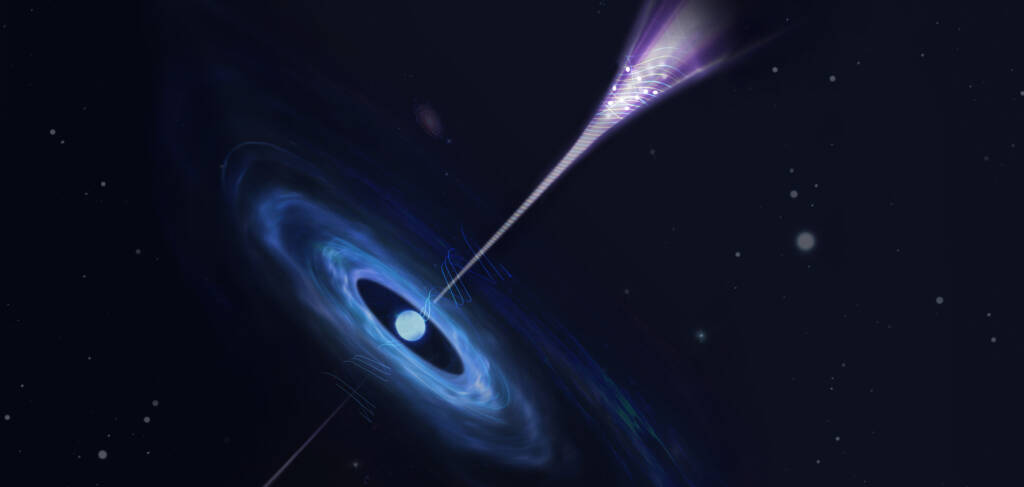
Professor Bing Zhang, Chair Professor of the Department of Physics, HKU and his partner team have discovered the ‘heartbeat’ of a newborn star. During a massive cosmic explosion, they detected a rapid, pulsing signal from a newly-formed ‘magnetar’ — a neutron star with an incredibly strong magnetic field. This discovery solves a long-standing mystery by proving that these strange stars can survive such violent explosions and are the engine behind some of the brightest flashes in the universe. (More information, please click here.)
This recognition underscores Hong Kong’s growing international standing in astrophysics and highlights HKU’s contributions to frontier research in galaxies, high-energy astrophysical phenomena, and cosmology. HKIAA will continue to support cutting-edge research and foster collaborations that drive both fundamental discoveries and broader public appreciation of astronomy and astrophysics.
The journal article can be accessed at: http://doi.org/10.1038/s41550-025-02649-w.
For more details of the news coverage, please refer to: