Academician Colloquium: Superconducting Detectors and Terahertz Astronomy
Digital Interactive Lab (DIL), 2/F, Main Library, HKU
November 13, 2025 (Friday) 5:00 pm – 6:00 pm
Speaker
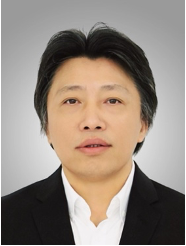
Professor Sheng-Cai Shi
Member of the Chinese Academy of Sciences
Professor, Purple Mountain Observatory (PMO), CAS
Chair, PMO Advisory Committee
Abstract
Superconductivity has long been known to enable highly sensitive photon detectors, yet superconducting detector technologies matured only in the late 20th century. The terahertz band lies between microwave and optical/infrared regimes, with its photon energies comparable to the superconducting energy gap. Driven by advances in superconducting detection technologies, terahertz astronomy has witnessed rapid growth in recent years, including the capture of the first black hole image in human history. This talk presents the latest progress in superconducting detectors and terahertz astronomy, together with China’s terahertz astronomy programs from space to the Qinghai-Xizang Plateau to Antarctica.
About the speaker
Sheng-Cai Shi has been a Professor at Purple Mountain Observatory (PMO), Chinese Academy of Sciences (CAS), since 1998 and currently serves as Chair of the PMO Advisory Committee. He earned his bachelor’s degree from Southeast University, China, in 1985, an MSc in radio astronomy from PMO in 1988, and a PhD in radio astronomy from Graduate University for Advanced Studies, Japan, in 1996. From 1992 to 1998, he worked at Nobeyama Radio Observatory, where he developed SIS mixers for the Atacama Large Millimeter/submillimeter Array. He returned to PMO in 1998 and established the Millimeter- and Submillimeter-Wave Laboratory. His research covers the physics of superconducting devices, terahertz mixers and detectors, and astronomical systems. He received the HLHL Prize in 2019 and was elected a Member of the Chinese Academy of Sciences in 2021.